October 27, 2026English
Monero: the invisible cat's manual
This week ChatWallet added Monero. From now on you can receive, send, request in the chat and check the history from the app; and to celebrate, here is a summary of its history and how it works, with a focus on privacy and self-custody.
Monero has spent twelve years being an experiment almost nobody bet would survive. No company, no presale, no cut for its creators and no owner who can be subpoenaed, bought or pressured. And it is the only large chain where privacy is not an option you switch on: it is the only way to transact.
Monero inside ChatWallet
It arrived in four releases —v3.82, v3.83, v3.84 and v3.92, between 22 and 26 October— and all with the same rule: the keys never leave your phone.
- Your account comes from your own phrase. If you restore ChatWallet on another phone, your Monero comes back with you. Under My 25 words you get the account in Monero’s standard format, so you can also open it in Feather, Cake Wallet or Monerujo.
- Everything happens on your phone. The wallet downloads blocks from a node and finds your payments with your view key, which never leaves the device. You can choose the node, including your own.
- Receive, send and history. Balance, address and QR; sending with a review step and the fee in plain sight; and a history built on the phone, showing who paid you on each incoming payment and the transaction key on each outgoing one.
- Payment proof verified on chain. When someone requests Monero from you in the chat, the app generates a different address for that contact; after the payment the proof arrives and your app verifies it: first “on the way”, then “verified: X XMR arrived”. And it checks that the payment went to an address that is yours, so nobody can show you the payment they made to someone else as if it were for you.
- No battery drama. Syncing runs only while you are looking at the screen and only on wifi: every day without opening Monero is about 28 MB.
There is a symmetry worth pointing out: Monero’s privacy does not rest on trusting a server, it rests on being able to verify without possessing. Your view key sees what is yours without being able to spend it; the payment proof demonstrates a payment without exposing the rest; the node validates the chain without asking your permission. It is the same move as PeerDAS sampling verification and as Ğ1’s web of trust.
Step 1 — If the master cheats, steal the technique
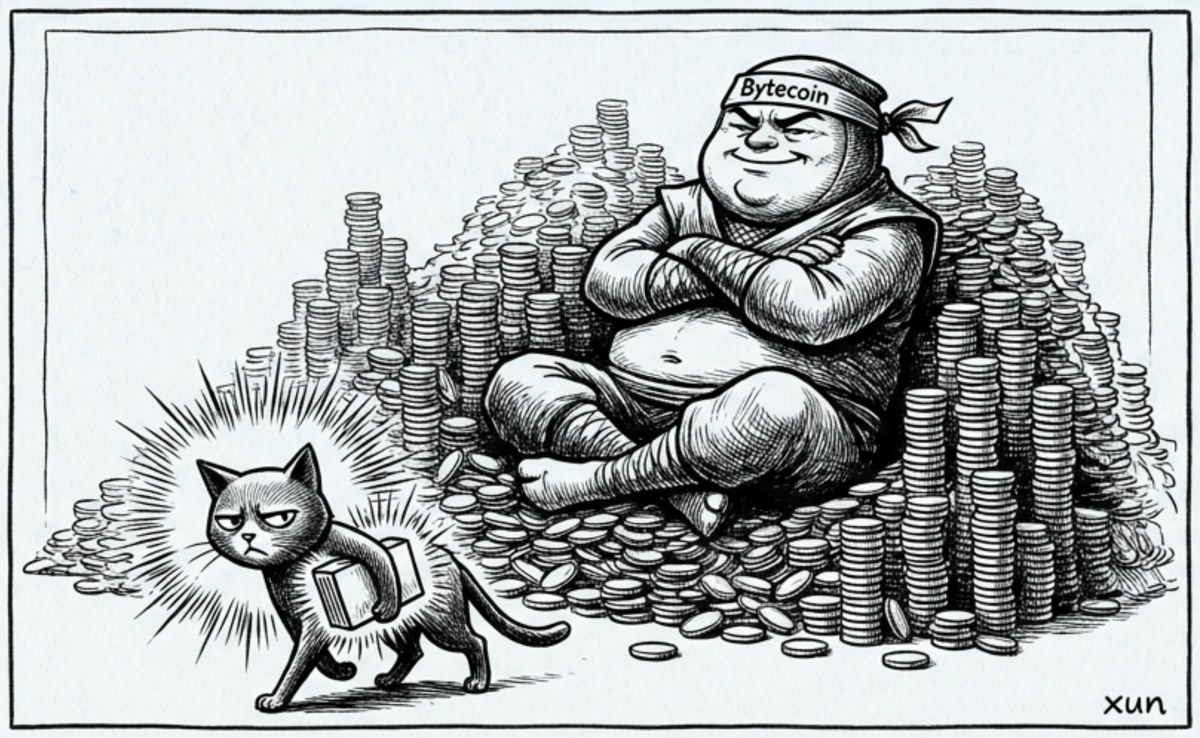
Monero was born from a suspicion. The CryptoNote protocol appeared signed by Nicolas van Saberhagen, a pseudonym with no known identity, with a simple idea: privacy has to live in the consensus layer, not in an add-on on top. The first coin to implement it was Bytecoin, and there lay the problem: by the time the code went public, almost 80% of the coins had already been mined in secret.
On 18 April 2014 a developer signing as thankful_for_today forked the clean code and released BitMonero. A few weeks later the community disagreed with the direction its creator wanted to take and kept the project, renamed Monero: coin in Esperanto.
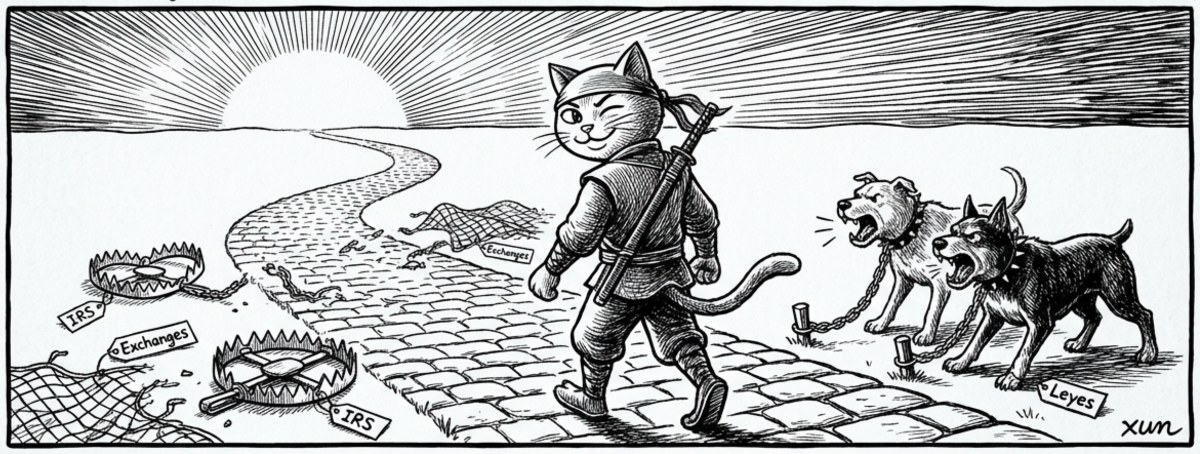
The first principle of the manual comes out of that: when the master cheats, you take the technique, drop the distribution and keep walking.
Step 2 — Have no leader, have no head to cut off
Twelve years later, Monero is still a statistical anomaly in a market of foundations and governance tokens:
- zero corporate companies;
- zero CEOs or founders in charge;
- zero ICOs or presales;
- zero rewards for the creators.
Development is funded by donations and by a crowdfunding system for proposals (the CCS), where anyone proposes work and the community puts up the money. Meetings are public and recorded. Nobody holds a share or a lifetime seat.
The practical consequence is the one that matters: there is no head office to raid. There is code, miners and users who decide to run a node.

Step 3 — Glass and shadows
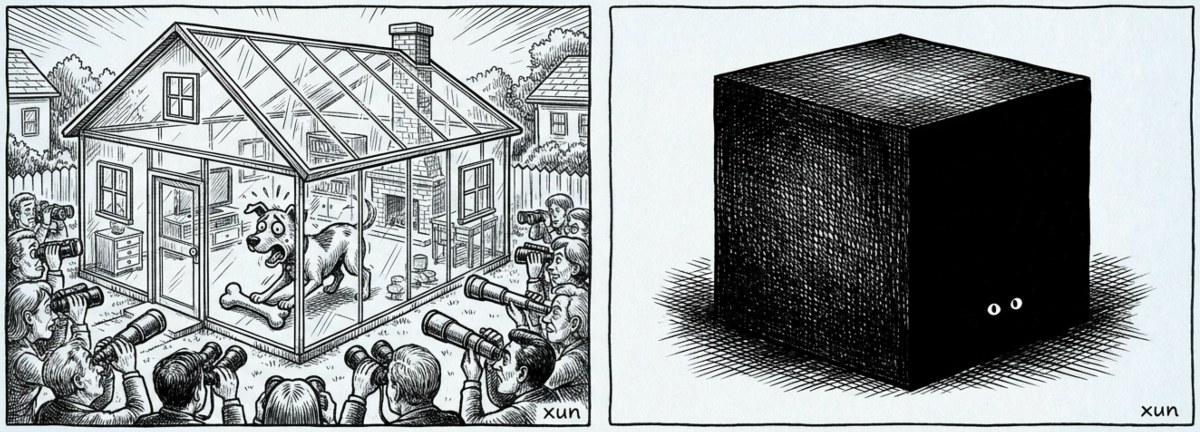
Bitcoin is a glass house, and not by accident: that is the design. Every transaction publishes the amount, the sending address and the receiving address, forever. The pseudonym protects you as long as nobody links the address to a person, and that link is an entire industry today: chain-analysis firms live by clustering addresses and crossing exchange data.
Once an address of yours has been attached to your name, everything it does from then on is visible. And everything it did before, too.
Monero does not hide that a transaction happened: it hides who sent it, who received it and how much it was. Those are three different problems with three different tools.
Step 4 — The jutsu of cloning (ring signatures)
To spend a coin you have to sign. The question is how you sign without saying which coin in the group is yours.
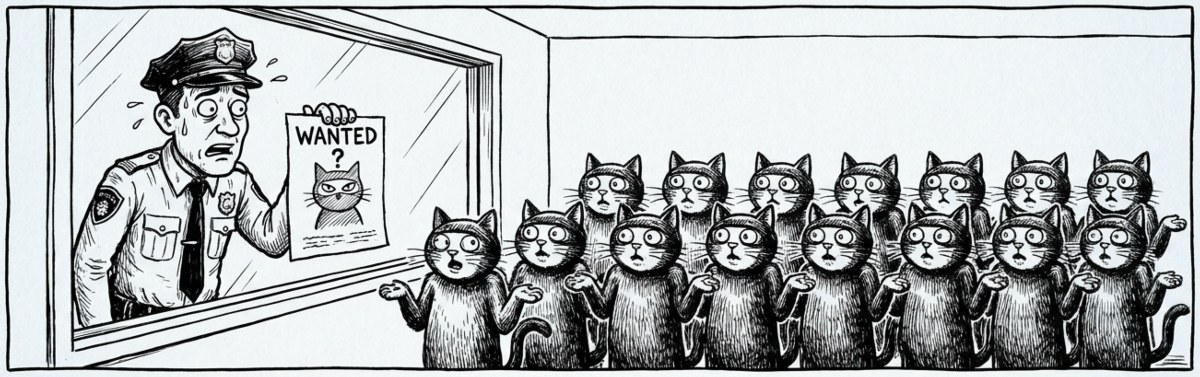
A ring signature takes your real output and mixes it with fifteen other outputs that genuinely exist on chain — other people’s coins, not invented ones — and produces a signature valid for the whole set. The verifier checks that someone in the ring signed, but cannot tell who. Your coin becomes one more cat in a room full of identical cats.
Since 13 August 2022 the ring is 16 by consensus rule: 1 real output and 15 decoys, the same for every transaction. Before that it was 11 (since 2018) and, earlier still, a number the user picked, which let people stand out through statistical elegance. Uniformity is not style: if every transaction looks like every other, chain analysis has nowhere to start.
The cost shows in the fees: a 16-member signature weighs more than an 11-member one. Monero chose to pay that price.
Step 5 — One-time hiding places (stealth addresses)
Your public Monero address is a façade: it exists so people can pay you, like a PO box number, and nothing more.
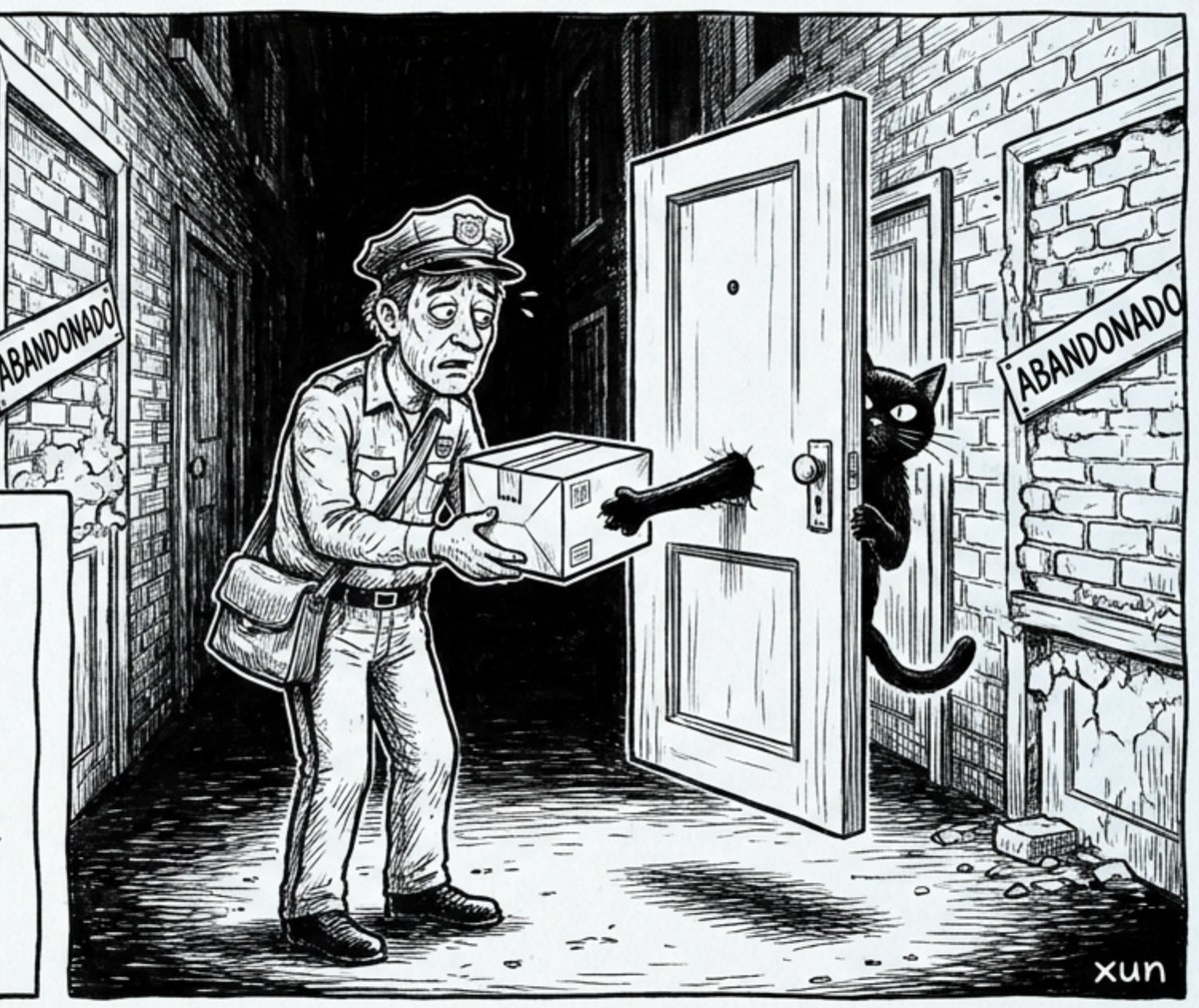
When someone sends you money, the protocol does not write that address on chain. It derives, from your public keys, a one-time address: the payment lands in an output only your wallet can recognise, and that is never repeated. Your real address never appears at any point.
That leaves a practical problem: if you use one address for everyone, whoever pays you sees all your incoming payments together. Hence subaddresses: one per contact, from the same account. In ChatWallet this is not an option buried in a menu: when someone requests Monero from you in the chat, the app gives a different address to each contact, so nobody can join up what you receive from others.
The other side of the coin is the view key, which lets you see your movements without being able to spend them. It exists for auditing: a company can hand it to an accountant or a court and prove what came in and went out without giving up control of the money.
Step 6 — Let nobody know the size of the loot (RingCT)
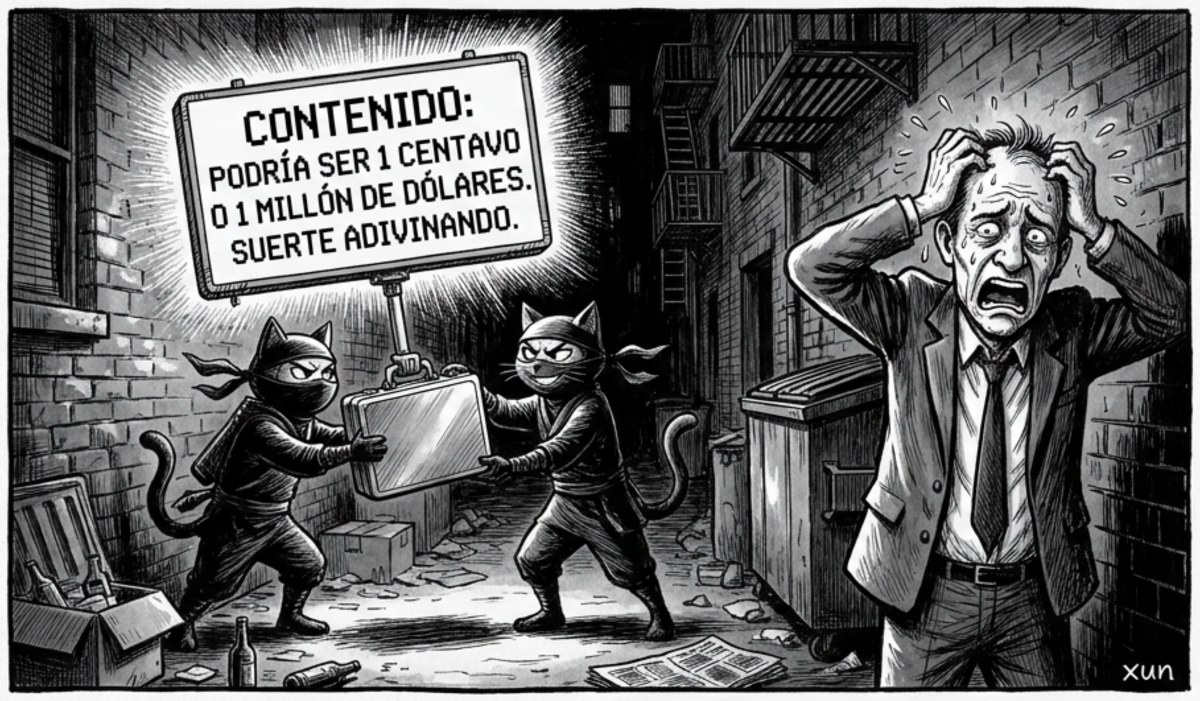
Hiding who pays is not enough if the amount is written next to it. In January 2017 Monero activated RingCT: the amount stops travelling in the clear and travels as a cryptographic commitment — a value that can be added and verified without being revealed — with a range proof showing the quantity is neither negative nor overflowing. The node checks that the money adds up without knowing how much it is.
Range proofs are the expensive part: without them, anyone could create coins out of nothing. The first generation (Borromean) was huge. In October 2018 came Bulletproofs, cutting transaction size by 80 to 90%. In August 2022 came Bulletproofs+, smaller and considerably faster to verify. Every improvement in the proof is a direct improvement in the fee the user pays.
The bug that was worth every coin in the world
In February 2017, while a signature scheme was being discussed on the cryptography mailing list, a member of Monero’s research lab noticed that a range-proof check accepted a degenerate case. Properly used, that hole allowed creating coins out of nothing, undetectably for anyone who did not know what to look for. It affected every CryptoNote-based cryptocurrency.
They patched it quietly: the fix shipped as a minor release claiming to correct something else, to avoid fanning the flames while nodes updated. Full disclosure came on 17 May 2017, with this sentence: the community verified that Monero’s chain had never been exploited with that bug. The same hole was used on Bytecoin, where later public analyses estimated hundreds of millions of coins created from nothing.
Step 7 — Travel light and do not trust the factories
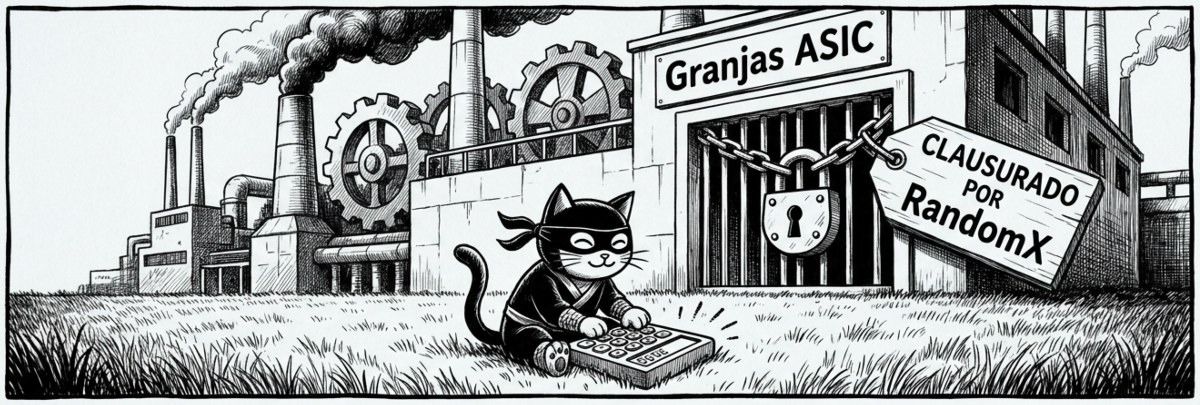
Monero upholds a rule almost no other chain dares to: the mining algorithm has to run on an ordinary computer. In 2018 ASICs were detected on the network and it was estimated that 80 to 90% of the hash power was specialised hardware. The answer was not to accept it: it was to change the algorithm.
In November 2019 came RandomX, designed to punish dedicated hardware. It is demanding in memory and in the kind of operations a CPU does well and a custom chip does badly, so industrial farms became obsolete overnight.
And there is a decision that usually surprises people: in mid-2022 the main emission ended (about 18.1 million coins) and tail emission began: 0.6 XMR per block every two minutes, forever. That is inflation below 1% and trending to zero, and it exists because without a reward there are no miners, and without miners there is no network to hold everyone’s privacy.
Step 8 — Laugh at the bounties on your head
In September 2020, the criminal investigation division of the IRS put 625,000 dollars on the table for anyone who could build tools to trace Monero. The contract went to Chainalysis and Integra FEC, two of the largest chain-analysis firms in the world.
Five years later there is no published method that breaks Monero’s cryptography. What exists is something else, duller and more dangerous: analysis of how decoys are chosen, timing heuristics and, above all, the contact points with the regulated world. A private coin does not save you from a KYC exchange or from a broker who writes down your face and your ID. Chain privacy protects the movement; it does not protect the edge.
The academic literature says so without makeup: a 2018 paper showed that a fraction of transactions could be de-anonymised with heuristics, and a 2022 study concluded that, for now, Monero is traceable only with enormous effort, and that it is probably a matter of time and investment before that changes.

Step 9 — If they close the door, use the window
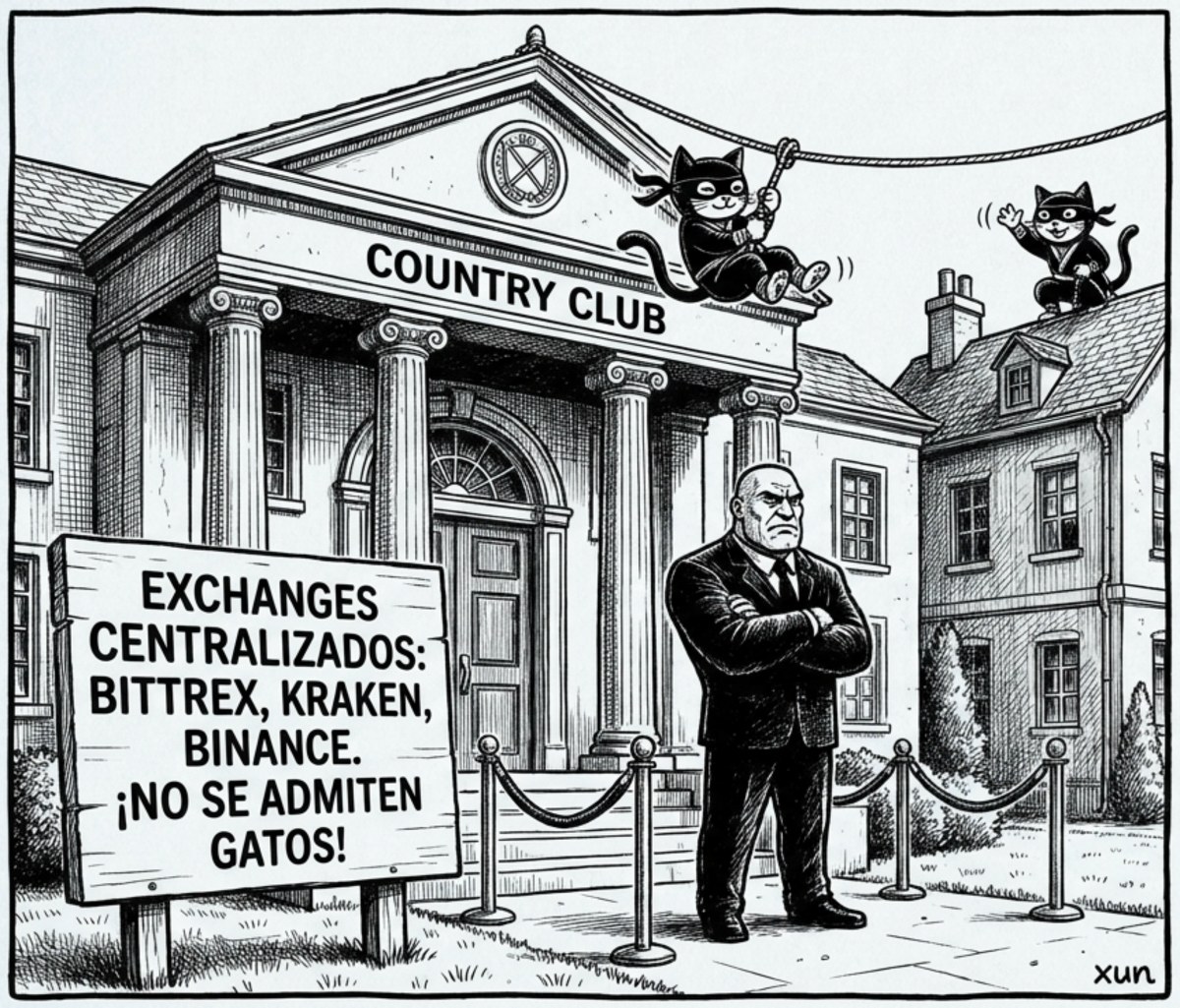
Between 2021 and 2025 regulatory pressure pushed the big platforms to drop Monero. Binance delisted it on 20 February 2024; Kraken removed it across the European Economic Area on 31 October 2024. They did not close the door out of conviction: they closed it because a coin their customers cannot audit complicates their licence.
The community did not ask permission, it changed doors. In August 2021 Bitcoin–Monero atomic swaps became available on mainnet thanks to COMIT: two different chains, an exchange with no intermediary and no custody, where if one side fails to deliver, the other gets its money back. In 2024 Haveno, the decentralised exchange built for Monero, started publishing stable releases; it is now on 1.11. Direct person-to-person trading became the normal route, with the cost that implies: less liquidity, more friction and more counterparty risk.
There was also a loss that hurt: LocalMonero, the reference peer-to-peer market, shut down on 7 November 2024 after seven years. No regulator closed it: attrition did.
Step 10 — Withstand the earthquakes without losing your balance
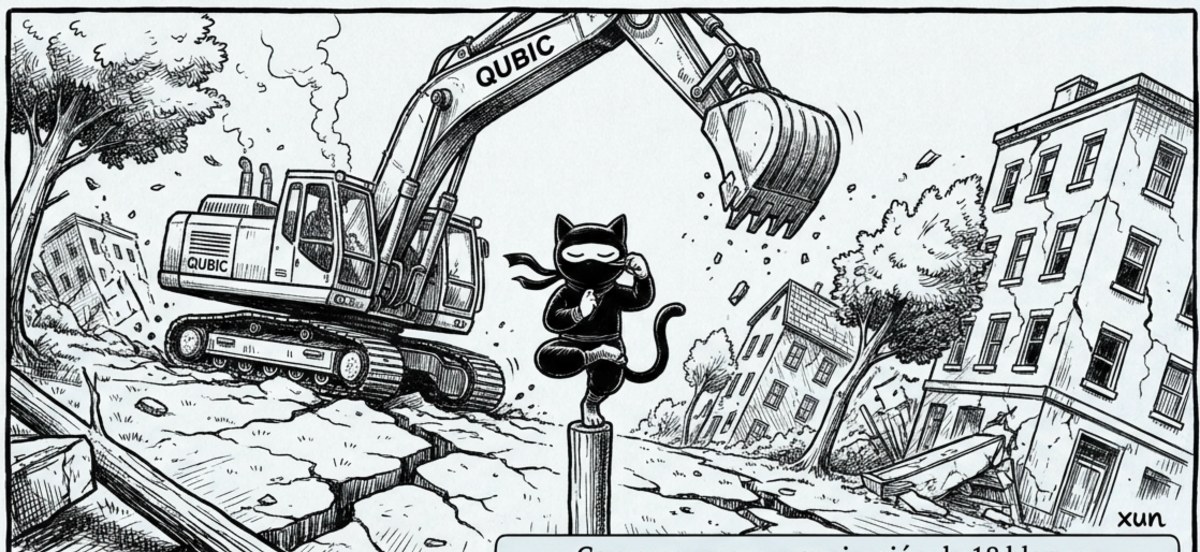
In September 2025, the Qubic project — which redirects its mining rewards into buying and burning its own token — pointed its hash power at Monero and at several points exceeded 50% of the hashrate.
On 14 September 2025, between 05:10 and 06:20 UTC, it mined an alternative chain of 20 blocks that managed to orphan 18 blocks of the canonical chain. It was the deepest reorganisation in the network’s history: 118 transactions invalidated and about 36 minutes rewritten. Qubic did not claim the attack and there was no confirmed mass theft.
Let us be clear: the cryptography was not broken, the order of blocks was rewritten. That creates no coins and reveals no amounts, but it can reverse a recent payment, which is why the advice was to wait beyond the usual 10 confirmations before accepting a large payment.
It is the most fragile point of any proof-of-work chain. The defence was not a button: it was the usual one, people running nodes and waiting for confirmations.
Step 11 — Learn to be your own bank
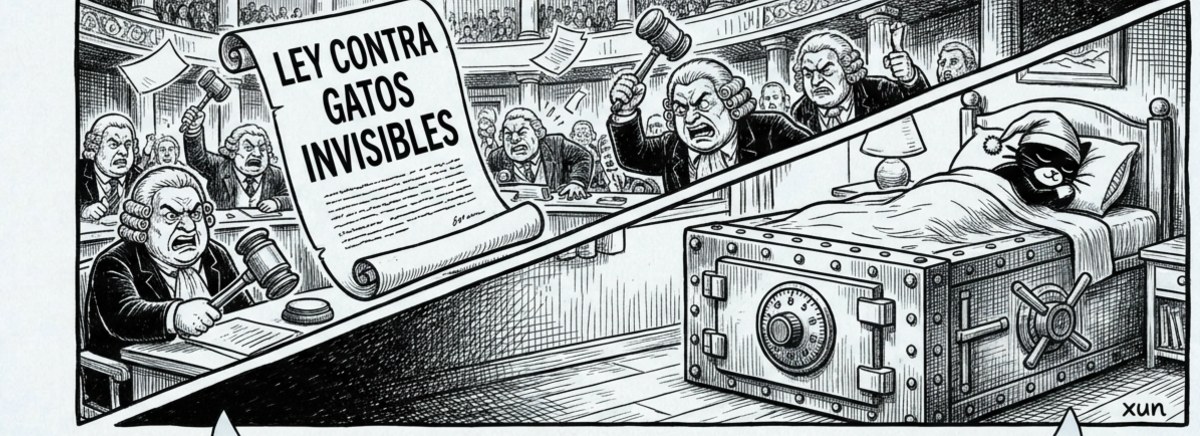
On 10 July 2027 the European anti-money-laundering regulation (AMLR) starts to apply. Its article 79 forbids regulated platforms — licensed exchanges — from offering accounts with coins that prevent identifying the holder, meaning privacy coins. The press headlined it as a “privacy coin ban”; the text is more precise: it binds obliged entities, not people.
A licensed exchange will not be able to custody your Monero. You will. The law does not reach self-custody, because the state’s jurisdiction ends where your cryptography begins: if the keys are on your phone, there is no intermediary to demand anything of.
That is why the debate about self-custody stopped being philosophical: in two years, holding your own keys will be the only way to have certain coins in Europe without stepping outside the legal framework.
Step 12 — Become the wind itself (FCMP++)
Rings of 16 have a ceiling: 15 decoys. If someone can rule decoys out — because they were spent, because they follow a pattern, because the analysis improves — the ring shrinks.
FCMP++ proposes the leap: instead of hiding your payment among 15 outputs, hide it among every output in the chain’s history, about 150 million. You would stop being a needle in a haystack and become the whole haystack. It comes with Carrot, a new address and transaction scheme.
Real status, no smoke: it is not on mainnet. It runs on a public test network — today the beta stressnet v3.0, published on 25 September 2026 — and there is no activation date. Important things are still missing from the test builds: watch-only wallets, cold wallets, hardware wallets, multisig and payment proofs. The latest stable release is 0.18.5.4, from 16 October 2026.
The direction is clear and the road is half built. As with everything in this project, it gets announced when it works, not when it sounds good.
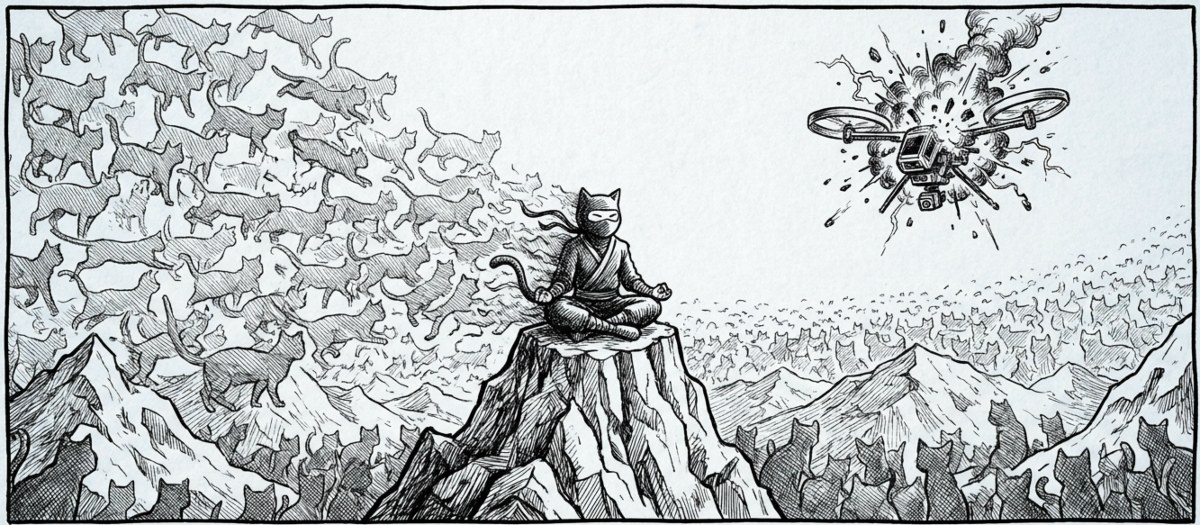
Twelve years in the shadows
Monero survived a bug that could create infinite coins, a 625,000-dollar state bounty, censorship by the largest exchanges and an 18-block reorganisation. It still has no company, no leader, no presale.
What holds that up is not charisma: it is a rule that is not negotiable. Fungibility is not borrowed. A bitcoin that was used for something someone dislikes can be worth less, because its history is public and someone can decide not to accept it. A monero has no history to look at: every monero is equal, and that equality is what makes it money instead of a list of provenances.
Financial privacy is not a luxury for those with something to hide. It is a fundamental right for those with something to protect: a salary, a home, health, family, ideas. And so, step by step, the art is mastered.