September 26, 2026English
PeerDAS: the ninja cat doesn't download the whole block
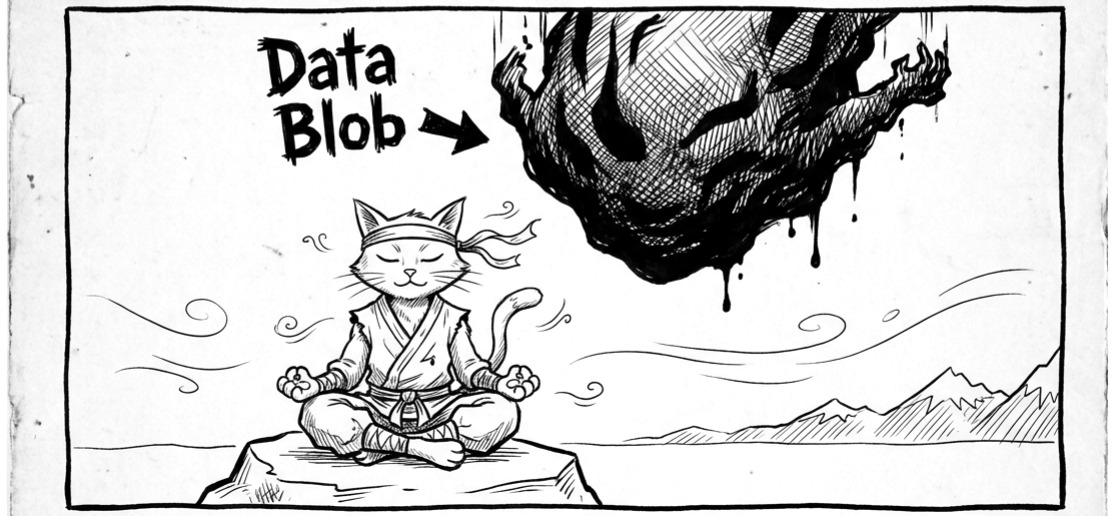
On 26 September 2026, Vitalik Buterin wrote something that was read quickly and discussed little:
It’s an underappreciated triumph of Ethereum client developers that PeerDAS has now been running for nearly a year with basically no problems. PeerDAS was a complex task: it’s the first large-scale instance of a blockchain that achieves consensus on the availability of data without needing any single node to download the entire block. Decentralized consensus without replication. And yet, it worked.
Two claims in one tweet: that it had been running for nearly a year, and that it had no problems. Both are true, and both hide something more interesting than they say. Because what held up was not the mathematics — that was already written, reviewed and published — and what broke along the way was not PeerDAS. The story of this year is the story of a protocol that lifted a weight off ten thousand nodes and left it entirely on one.
The weight of the data
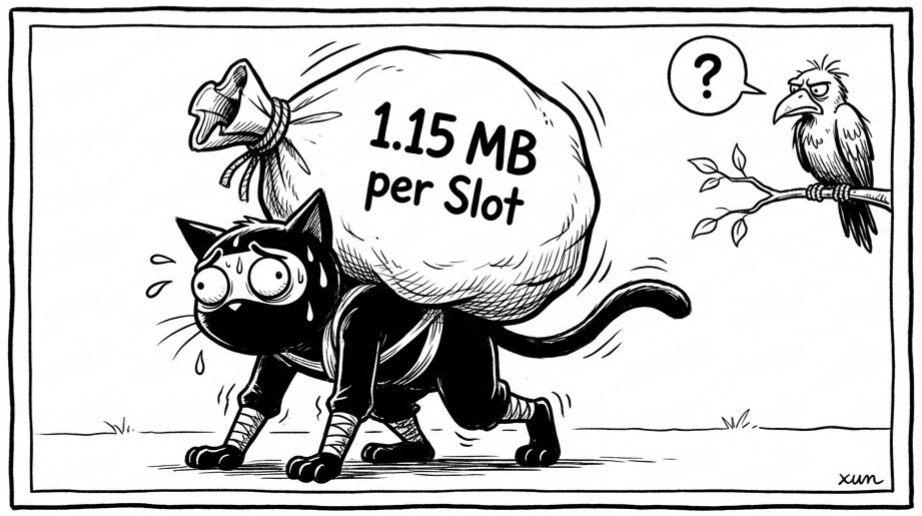
Let’s start with the problem, because without the problem the trick makes no sense. Rollups send data to Ethereum in packages called blobs, 128 KiB each. Every 12 seconds, a new block. With the parameters in place before Fusaka — Pectra’s, 6 blobs of target and 9 of ceiling — that was already more than 1 MB per slot whenever the network used all the space available.
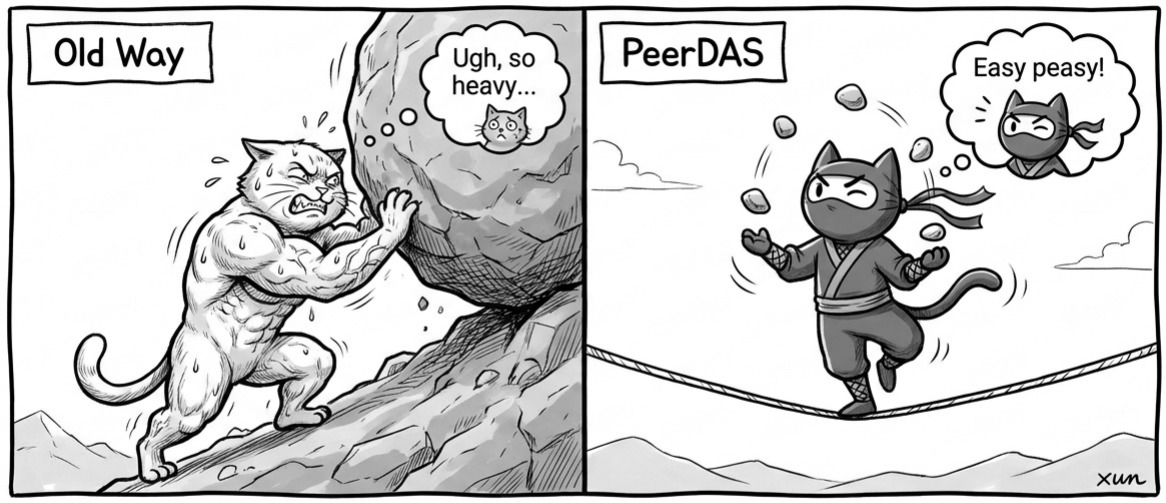
Before PeerDAS, every node downloaded all of it. And there is the trap: decentralisation is not lost to an attack, it is lost to arithmetic. If the minimum requirement to verify the chain grows without a ceiling, the set of people able to verify the chain shrinks without a ceiling. Forcing every node to carry everything is the most elegant way to kill decentralisation: it doesn’t ban it, it makes it expensive.
The bet: divide the work
PeerDAS (Peer Data Availability Sampling) is the answer, and it reached mainnet with Fusaka on 3 December 2025, at slot 13,164,544. The idea is one sentence: nodes stop downloading the whole file and mathematically guarantee the data exists while carrying a microscopic fraction of it.
Worth stating precisely, because it sounds like magic: it is not that nodes trust someone who does hold everything. It is that they can prove the whole is there without having seen it. The decentralised division of labour, applied to data availability.
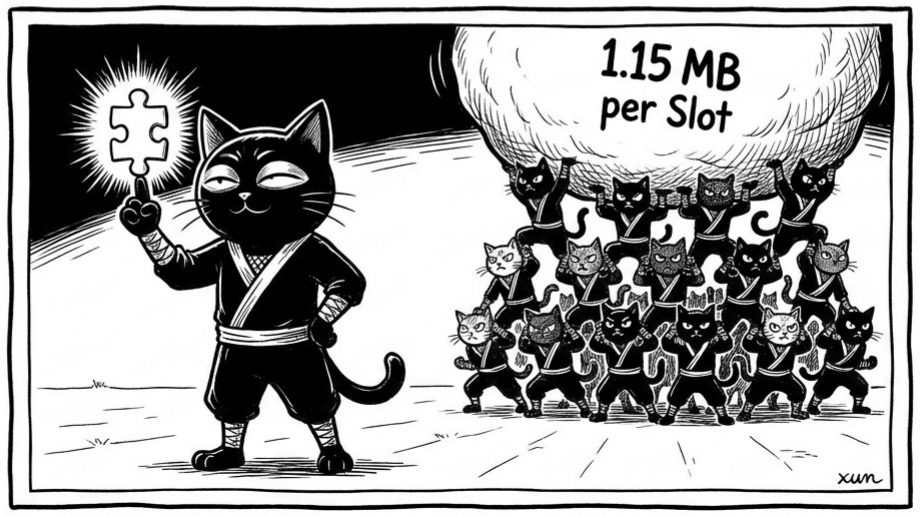
Step 1: the holographic slice
Before anything is handed out, the block is stretched mathematically with Reed-Solomon coding: the data is doubled (2× extension). And there the trick appears: if you hold any 50% of the scattered pieces, you can reconstruct 100% of the original data.
It is not a backup copy. It is a hologram: every fragment contains information about the whole, which is why none of them has to be complete.
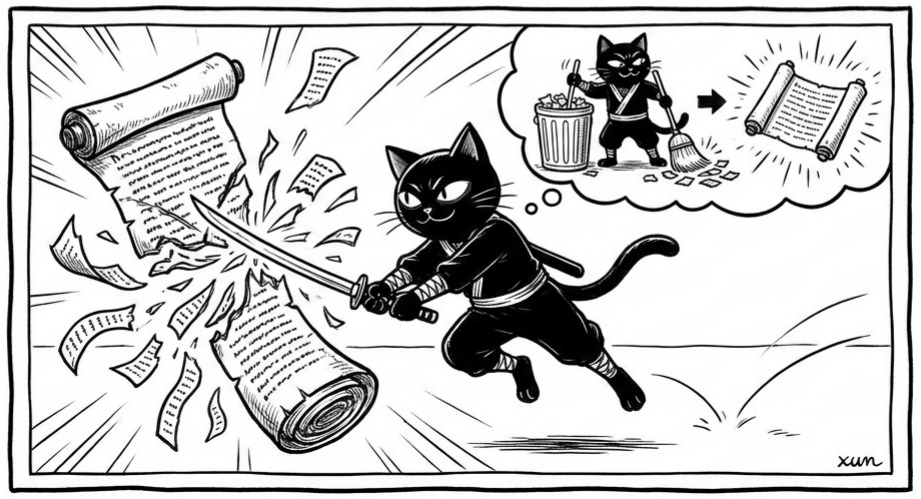
Step 2: 128 columns
The extended blob is not handed out at random. It is structured into exactly 128 vertical columns, and those columns become the network’s new foundational unit of data. Everything that follows — custody, sampling, subnets — is thought of in columns.
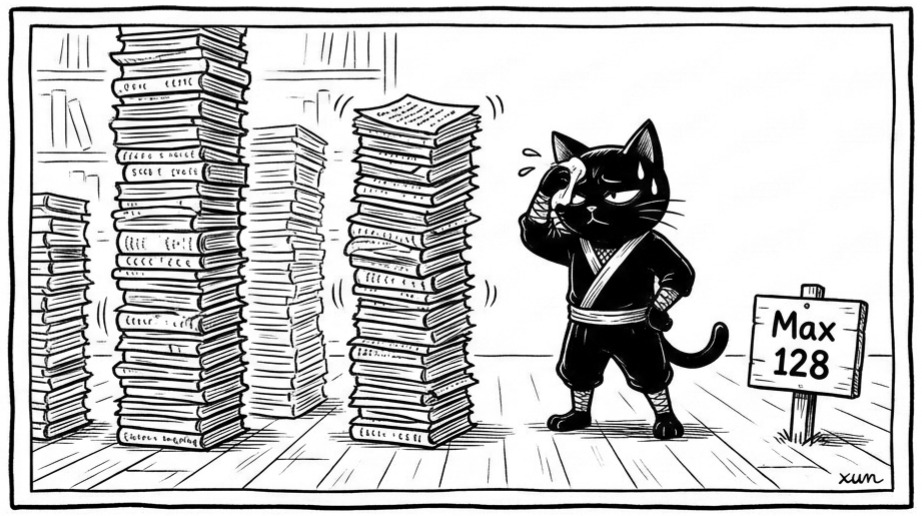
Step 3: tuning into a frequency
The network splits into column subnets, and a home node does not listen to the whole network. It subscribes to a random and permanent subset (eight of the 128 columns, say) derived from its own Node ID.
That it is permanent matters more than it seems: custody is not a choice the node makes every slot, it is a position assigned to it by identity. Nobody gets to custody only what suits them.
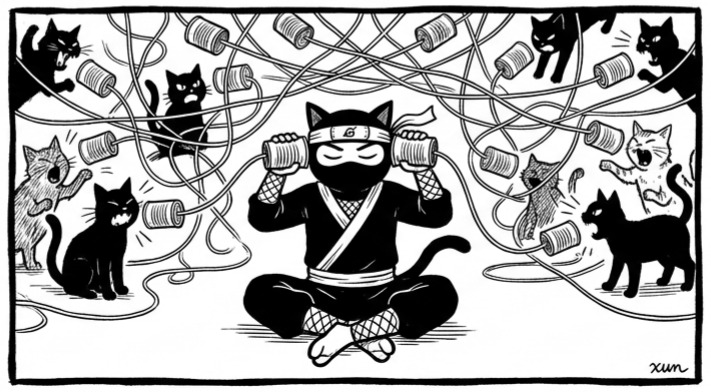
Step 4: the probabilistic taste test
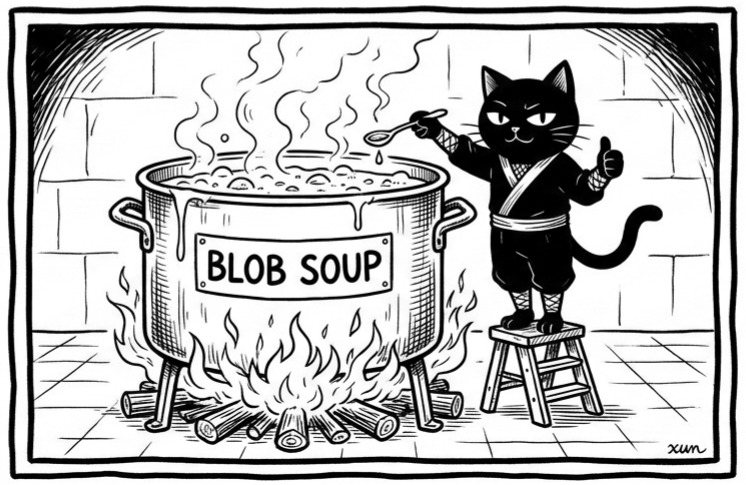
Here is the epistemic leap of the whole design. You don’t need to drink fifty litres of soup to know whether it is salty.
Nodes request random, tiny samples from other people’s columns. And from having tasted a few random drops, they gain statistical certainty that the entire blob is available. Security does not come from total coverage; it comes from the fact that a lie would have to survive simultaneously every random sample any node decides to request. It is a bet — a very good bet — on probability as a foundation.
Step 5: the cryptographic seal of truth
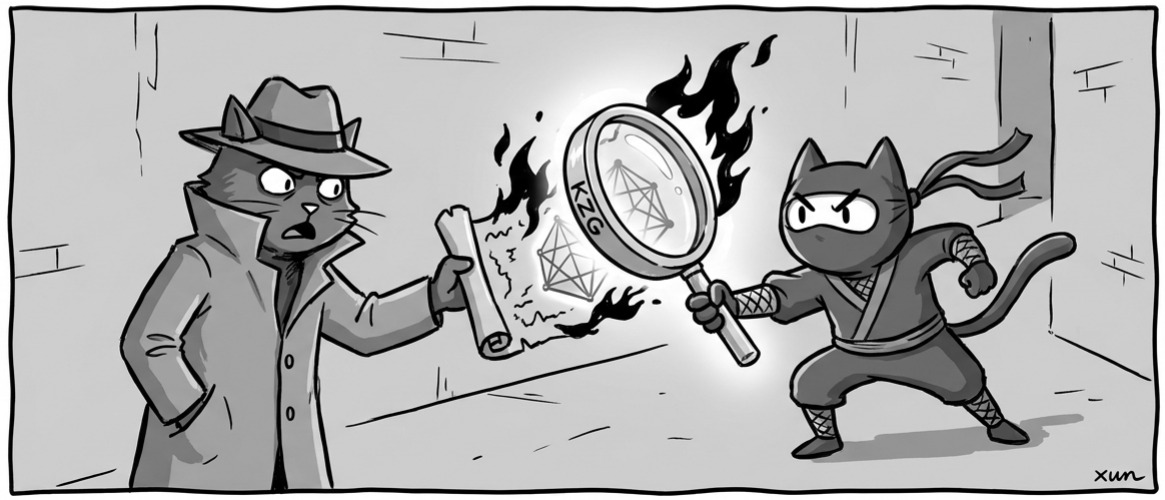
And this is where sampling becomes trustworthy rather than naive: KZG cell proofs let any node instantly verify a peer’s sample by checking it against the main block’s mathematical commitment. The node never has to trust the peer serving it data.
Sampling without verification is faith. Sampling with verification is proof. The difference between the two is a cryptographic commitment that ties every cell to the block, and it lets you accept data from an enemy.
The safety net of the supernodes
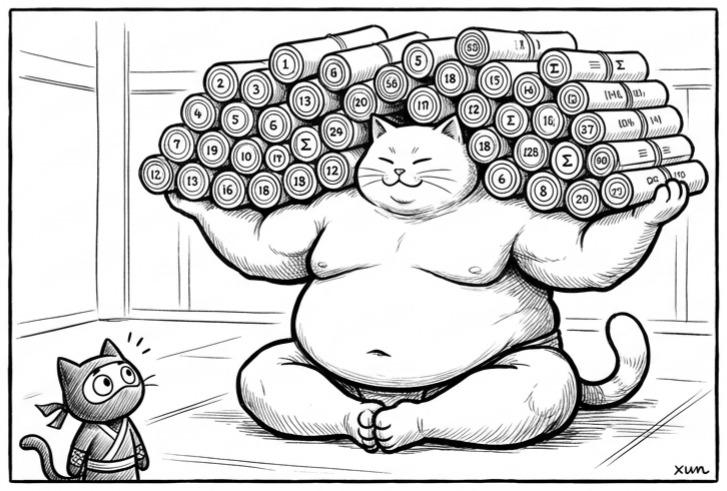
One gap remains and it deserves naming, because the headline “decentralized consensus without replication” covers it up. While home nodes sample a fraction, validators with 4,096 ETH or more act as supernodes: they custody all 128 columns and are the backbone that guarantees reconstruction is always possible.
In translation: small nodes sample, big ones archive. PeerDAS did not eliminate the full node — it made it optional for nearly everyone and mandatory for a few, and those few are the ones with the most capital. It is a reasonable trade, and it is infinitely better than the world before it, where the obligation fell on everyone. But it is a trade, not a gift.
What PeerDAS doesn’t shard
Here is the part the announcement doesn’t mention, and the part that makes this year a beginning rather than an ending.
Consensus Layer verification became horizontally sharded: that is PeerDAS. But the Execution Layer blobpool is not — nodes still download full blobs as they are submitted — and, above all, the block proposer is still a single node that must:
- extend the blob with Reed-Solomon coding,
- compute every KZG cell proof,
- and distribute all 128 columns across the network,
all of it before the attestation deadline, four seconds into the slot. If it doesn’t make it, it loses the block or gets reorganised out.
The work of verifying was spread across thousands. The work of publishing is still whole on one. The bottleneck didn’t disappear: it moved from bandwidth to the proposer’s critical path.
And this stops being theory once you measure it. An analysis by Chainbound found that more blobs per block correlates with worse block+blob validation latency, lower attestation rates and more orphans, and drew an uncomfortable, precise conclusion: under a PBS that competes on latency, that can impose an artificial blob ceiling below the limit the protocol would tolerate. On the 60-node devnet Optimism ran, they got to about 50 blobs per block and that is where the crack showed: consensus delays piling up, blob fetching becoming unreliable, and some supernodes starting to fail.
It is not that PeerDAS doesn’t scale. It is that it scaled half the problem, and the other half — execution, proposing, mempool — is still waiting for its own PeerDAS.
The traffic jam that remains
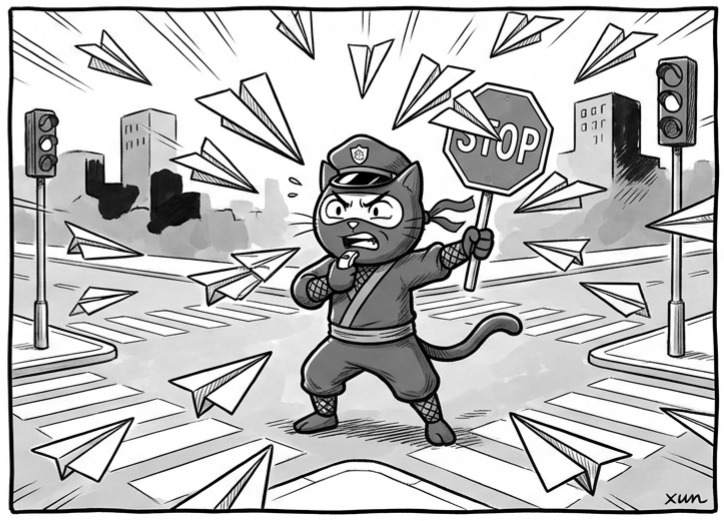
The second open front is less visible and more urgent: the blobpool, the Execution Layer’s blob mempool. When a rollup submits a blob, nodes still download it in full before it becomes available on the network. Availability verification is horizontal now, but the propagation of the input is still vertical, and that opens a very concrete denial-of-service vulnerability: you can flood the network with junk blobs and make every node pay the cost of downloading all of them, one by one.
The solution has a name — vertical sharding — and it isn’t here yet. PeerDAS solved the problem at the exit; the entrance is still waiting.
The dial that needs no hard fork
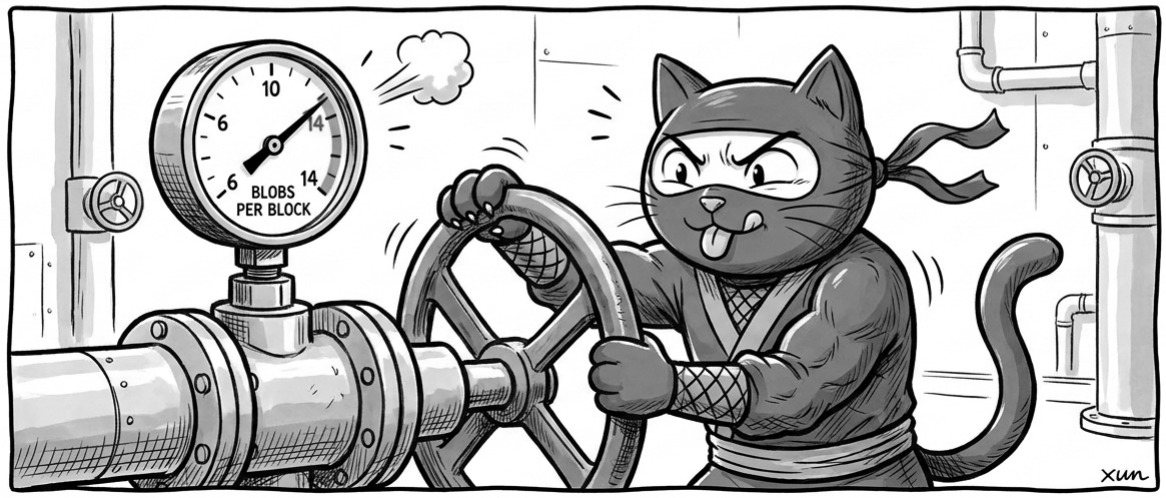
The second underappreciated move is one of design, and it is almost more elegant than the sampling: PeerDAS was not switched on at full capacity. It was switched on at some capacity, and then dialled up with BPO forks — Blob Parameter Only (EIP-7892) — which are neither coordinated hard forks nor client updates: they are parameters.
| Upgrade | Target blobs | Max blobs |
|---|---|---|
| Cancun | 3 | 6 |
| Pectra (Prague) | 6 | 9 |
| Fusaka + BPO1 | 10 | 15 |
| BPO2 (7 Jan 2026) | 14 | 21 |
| BPO3 (drafted) | 21 | 32 |
From day one of Fusaka to today, the block went from 10 to 14 target blobs and from 15 to 21 max: 1.75 MiB of target and 2.6 MiB of ceiling every 12 seconds. And all of that without the network having to coordinate again, because capability — the hard part, shipped once — was separated from quantity — the easy part, turned like a dial. An EIP puts it with an honesty you rarely see: BPOs “are not motivated by demonstrated demand, but by the need to evaluate the system’s limits in a controlled manner.”
It is a laboratory at mainnet scale, with a hand on the valve.
A year without problems, almost
Now the part where Vitalik’s headline deserves a minor adjustment. It is not nearly twelve months: it is nine months and twenty-three days. In that time, PeerDAS as a protocol did not fail once. But the network had its days.
Days after Fusaka, a bug in Prysm v7.0.0 — a consensus client — generated needless old states while processing outdated attestations and knocked nodes out of action: at the peak, around a quarter of mainnet’s validations stopped participating and the network came close to losing finality. Months later, a sync livelock in Lighthouse on the Hoodi testnet left the chain head stuck every day and a half, with the node’s own rate-limiter blocking every request for columns.
Neither of them was a failure of PeerDAS. And that is the point, which is exactly the one Vitalik is praising: a new protocol going through its first year while a client breaks and the network absorbs it is not demonstrating mathematics. It is demonstrating fault isolation.
Client diversity is to development teams what PeerDAS is to nodes: that none of them carries everything, so that the one that falls doesn’t take the network down with it. It is the same principle applied twice — in the technical layer and in the social one — and it is in the second where this year was truly earned. A protocol is written in an EIP; an ecosystem that withstands a new protocol is built over years, and it shows up in no metrics dashboard.
The prize
The economic consequence is the one you can already see coming: if data availability stops being the scarce resource, the supply of blockspace multiplies and L2 fees fall by orders of magnitude. Ethereum is not competing to be the fastest chain; it is competing to be the cheapest and most verifiable settlement layer. That is where this year becomes the foundation of everything else.
The big one is still missing
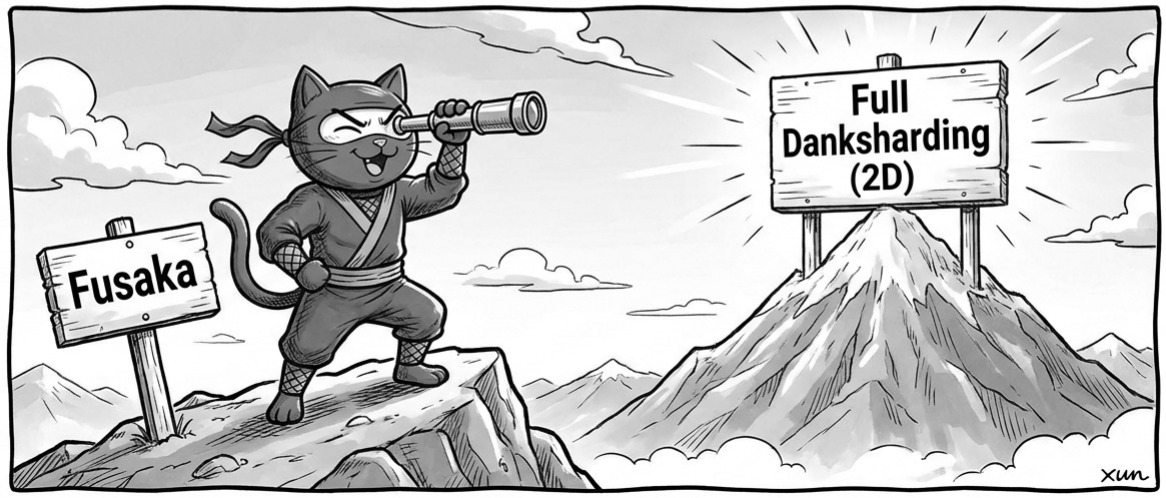
The parameters the network runs today are those of a 1D sampling scheme: a single dimension of coding. The destination is full danksharding, with 2D coding — extending not just rows but also columns — and 64 blobs or more per block.
The difference is not cosmetic. In 2D, a node needs to sample far less data to reach the same level of certainty, and the proposer’s work is genuinely spread around. PeerDAS is not the end of scalability: it is the proof that the mathematics works in production, and that proof was the only thing missing to authorise the rest.
Data Available
Look at the last panel of the series: the cat lets the scroll go, the network breathes, and the whole vignette comes down to two words that are not a victory cry but a condition: Data Available.
It is worth pausing on what kind of certainty PeerDAS buys. It is not the certainty of having seen everything. It is the certainty that, if something were missing, the lie would have to survive simultaneously every random sample any node decides to request. It is a probabilistic certainty, and for that very reason it is cheap to obtain and cheap to repeat on every slot.
And this — and nothing else — is the bridge to what we have been writing about. Yesterday we told how Ğ1 decides who counts as a person with a web of trust: there is no central registry, there are five signatures from other members, and those signatures expire and have to be renewed. Ğ1 doesn’t ask for the complete truth either: it asks for a local, sufficient, renewable verification.
They are the same epistemic move in two different layers. PeerDAS: sample a few cells against a KZG commitment. Ğ1: verify a few signatures that expire. In neither case is trust stored: it is produced, and produced again. And in neither case do you need to hold everything in order to know that things are fine.
The last century taught us the opposite: to trust, you had to have the copy, the registry, the notary, the full backup. Cryptographic commitments broke that equation. A proof is not a file: it takes up no room, it doesn’t get lost, it can be rebuilt at any moment, and it doesn’t hand anyone the keys to your house.
Which is why this year of PeerDAS is, beyond an engineering triumph, a lesson about what freedom is: not depending on whoever holds the copy. For a decade, the answer to “is it all available?” was “download the whole block and find out yourself”. Today the answer is “sample a few cells and know”. It is faster, it is cheaper, and above all it is older: it is the way trust has always worked between people who don’t need to hold the whole truth to know that the other one is there.